
AI-Native Platforms
Every request, from first click to done.
Platforms with AI agents at the centre: an agentic storefront that serves your customers, service centres and desks where every request has an owner, and back-office operations that run as flows — with a person approving what matters.
The outcome we contract for
Requests completed on the platform — counted by the platform.
A platform measures itself: every request has a start, an owner and an end. That is what we contract on — requests completed end to end, the time they take, and the share of services that run on the platform rather than around it.
Scope: service catalogue and storefront · AI agents that guide, draft and hand over · staff desk and work queues · approvals, meetings and decisions · procurement, bookings and tasks · correspondence and records · roles, permissions and delegation · connections to the tools you already run — Microsoft Teams, Zoom, Zoho and others · Arabic-first, bilingual interfaces.
Proof
Built for a public institution with 160,000+ member companies. Ready for the next.
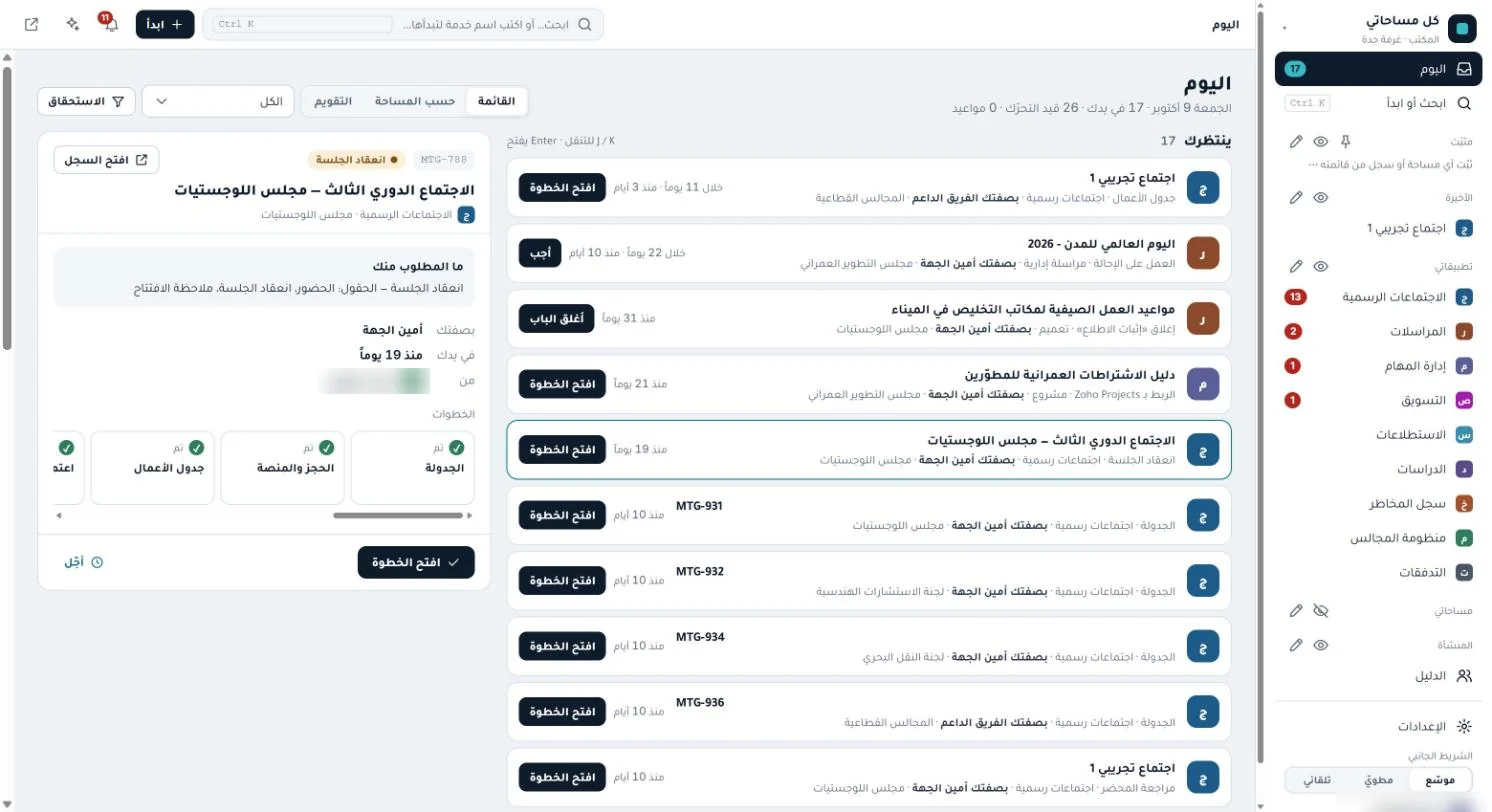
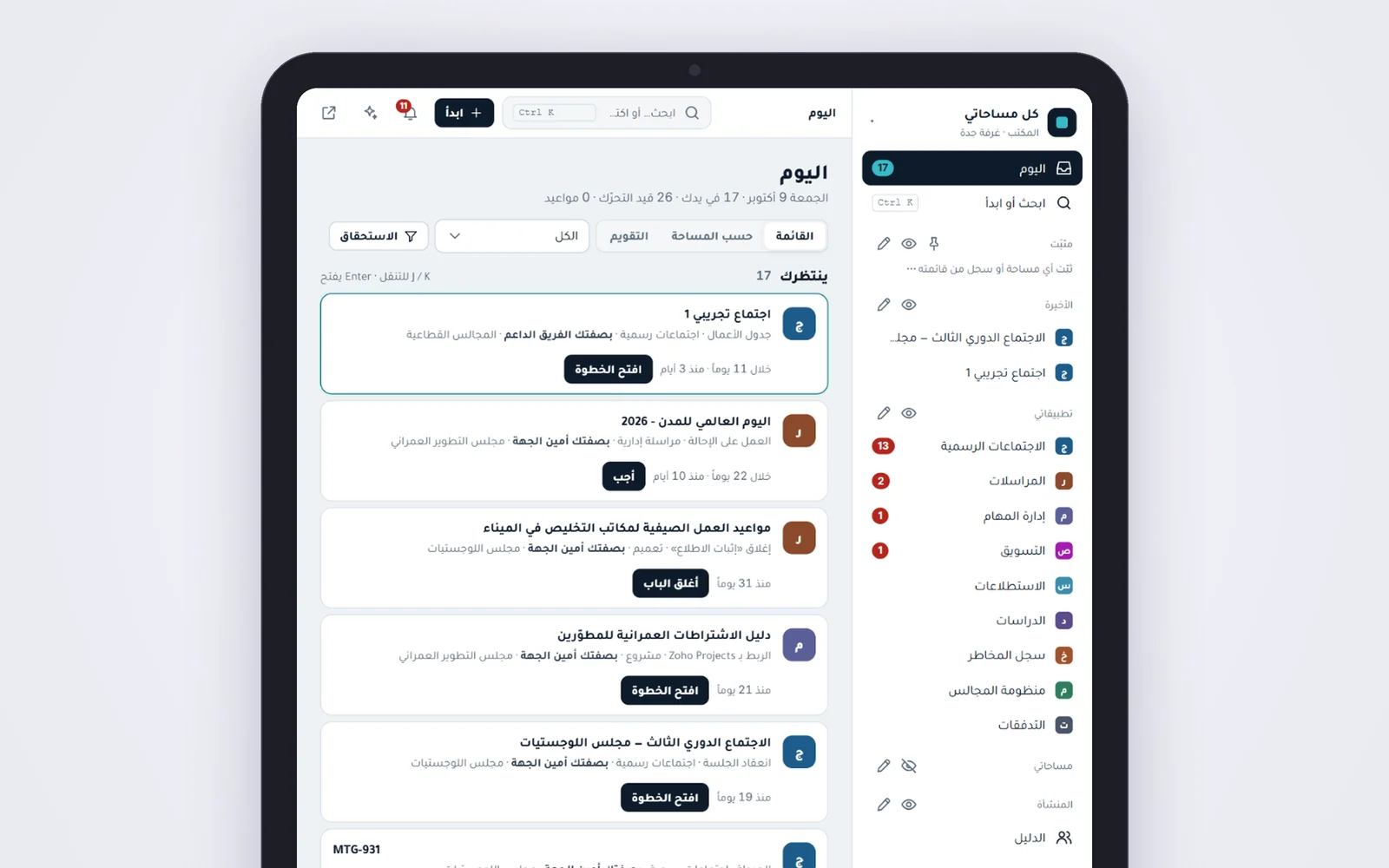
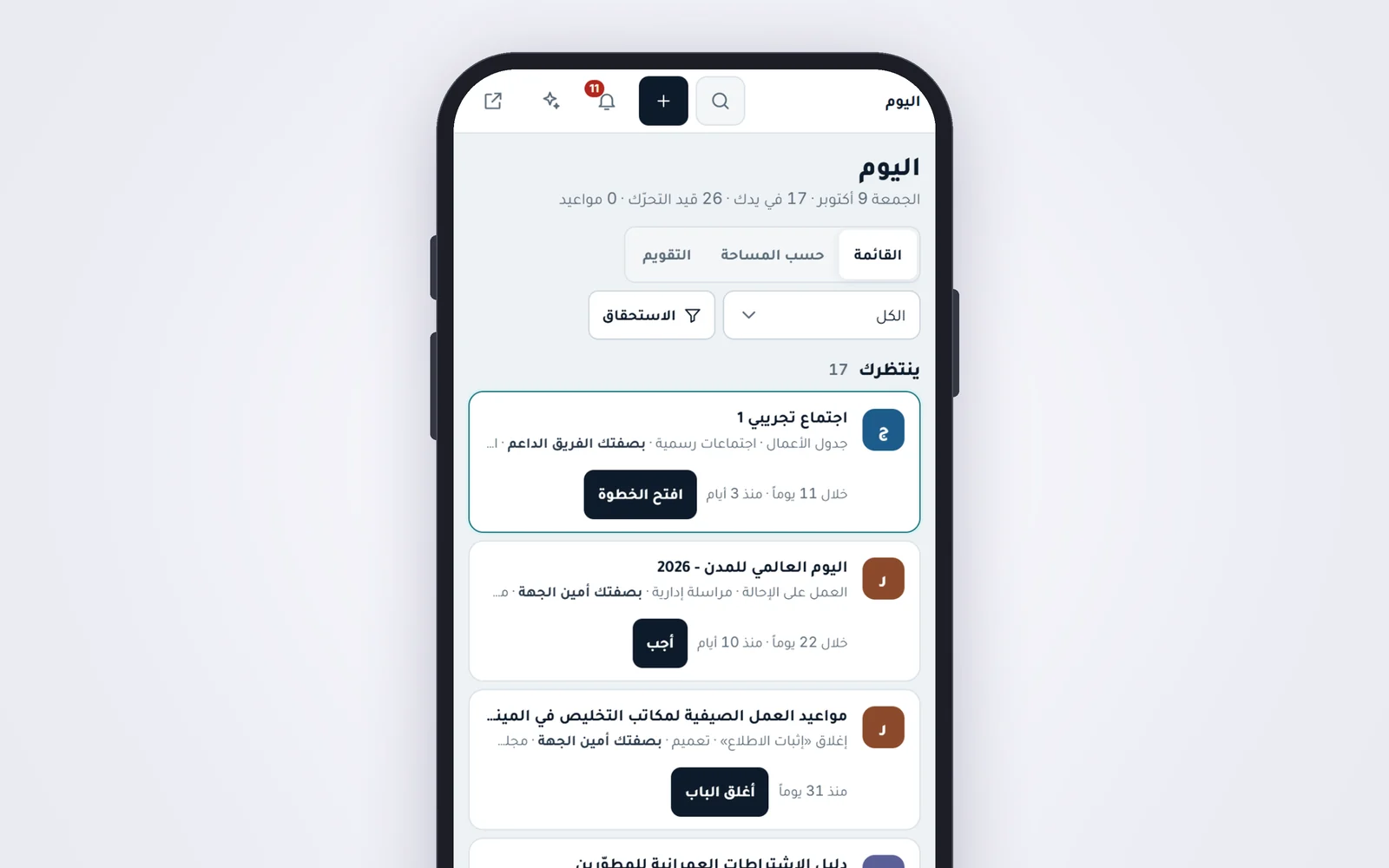
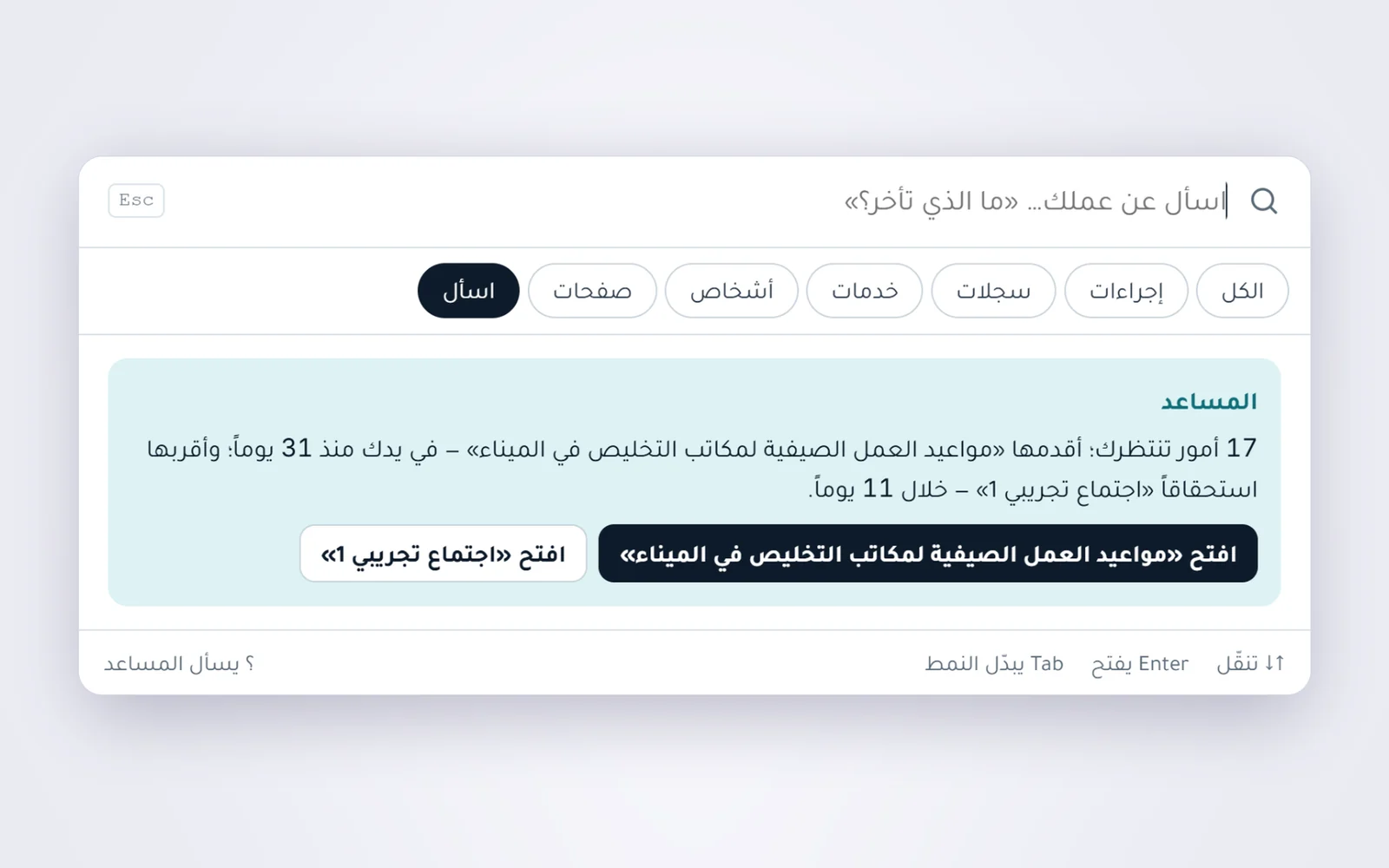
Jeddah Chamber
One platform for the whole chamber
Member services with their prices, sectoral councils and committees, the secretariat and departments, marketing and communications, procurement, bookings and correspondence — 22 apps on one platform.
Online retail
An AI sales agent for a packaging store
A five-step consultation that matches packaging to the customer's product, prices custom sizes and creates the draft order in the store for the team to confirm.
Built to travel
Configured, not rebuilt
The platform itself never names the chamber: its structure, services, rules and wording sit in the chamber's own configuration, with a bilingual lexicon of 2,400+ entries — so the next institution starts with setup, not a rebuild.
Guardrails
The agent drafts. A person decides.
Every step the assistant helps with ends with a person reading what will be sent, then sending it. Where it fills in a value from the account that nobody has confirmed, it says so and asks.
The language model behind it is a setting, not a dependency: change the provider, or run without one — the platform falls back to keyword matching inside the server, and nothing leaves it.
Three layers
Storefront. Desk. Back office.
01 · Agentic storefront
An agent at the counter
Customers say what they need. The agent finds the right product or service, asks for what is missing, prices it and opens the order — then hands it to your team. On an online packaging store, a five-step consultation ends in a draft order. For a chamber, members start any service from a public catalogue, and a consulting market matches, evaluates, awards and pays outcome-based projects by its own rules.
02 · Service centres & desks
Every request has an owner
Requests land on one desk, in queues by role, with a count of what awaits each person's action. Staff work step by step; an assistant drafts each step into the form and asks one question at a time. A person reads exactly what will be sent — and sends it.
03 · Back-office operations
The back office runs as flows
Council and committee sessions — scheduling, agenda, attendance, voting, minutes and decisions — alongside procurement with supplier competition, facility bookings, correspondence, tasks, polls, risks and studies, each with its own roles and permissions.